
Clearwater County Criminal Court Records
A criminal court record begins when a criminal case is opened in Minnesota District Court. In Clearwater County, District Court is the trial court for misdemeanor, gross misdemeanor, felony, juvenile, probation violation, and related criminal proceedings. Court Administration keeps the court file. The Clearwater County Attorney reviews charging for county offenses and must have probable cause to charge a specific defendant with a specific offense on a specific date within the county. Conviction later requires proof beyond a reasonable doubt.
Law enforcement may investigate, cite, arrest, or book a person, but the criminal court file is the court-side record. It may contain a complaint, filed charges, bail or bond conditions, first appearance, omnibus hearing, motions, plea, trial setting, disposition, sentence, probation conditions, and later violation hearings. For a closer focus on booking charges and filed court charges after arrest, use Clearwater County arrest records and charges.
The MCRO FAQ explains case availability limits, pending criminal name-search limits, old cases, expunged cases, and destroyed records.
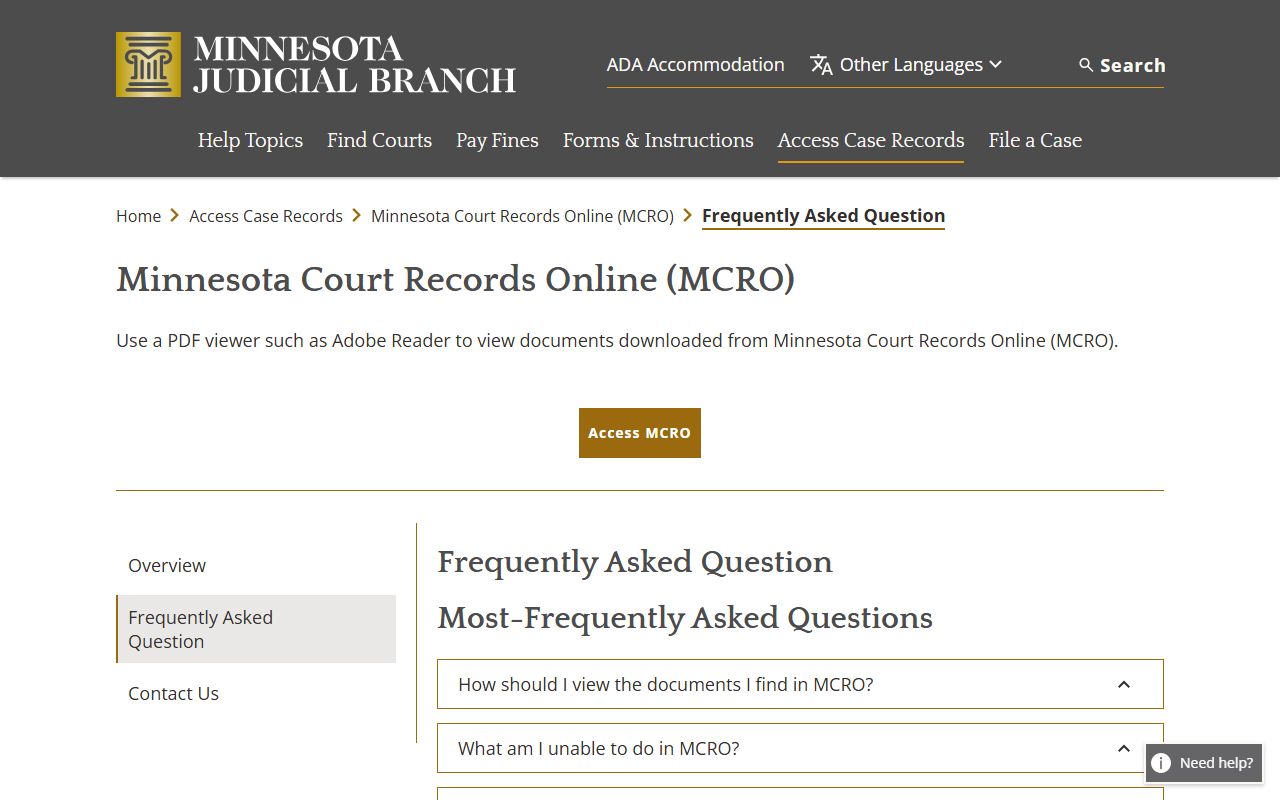
Those limits matter because a missing MCRO result does not always mean no criminal court record exists.
Search Clearwater County Criminal Court Records
Start with MCRO Case Search. Choose Name if the defendant name is known, Case Number if the 15-CR file number is known, or Attorney if the lawyer is the best clue. Select Criminal in the case category options and narrow Court Locations to Clearwater County. MCRO can show case details, Register of Actions, hearings, monetary items, and public documents allowed for remote access.
- Open MCRO Case Search and choose Name, Case Number, Citation Number, or Attorney.
- For a name search, enter the defendant's first and last name and use date of birth when available.
- Set Case Category to Criminal and choose Clearwater County in the county list.
- Open the result and read the Register of Actions, hearing list, charges, disposition, and public documents.
- Contact Clearwater County Court Administration for certified copies or cases not available remotely.
MCRO is not the official criminal-history background-check system. The Minnesota Public Criminal History Search from BCA/DPS is the public conviction-history route. It is better for conviction-history checks, while MCRO is better for the court case file.
The BCA criminal-history portal is shown below as the separate public conviction-history system.
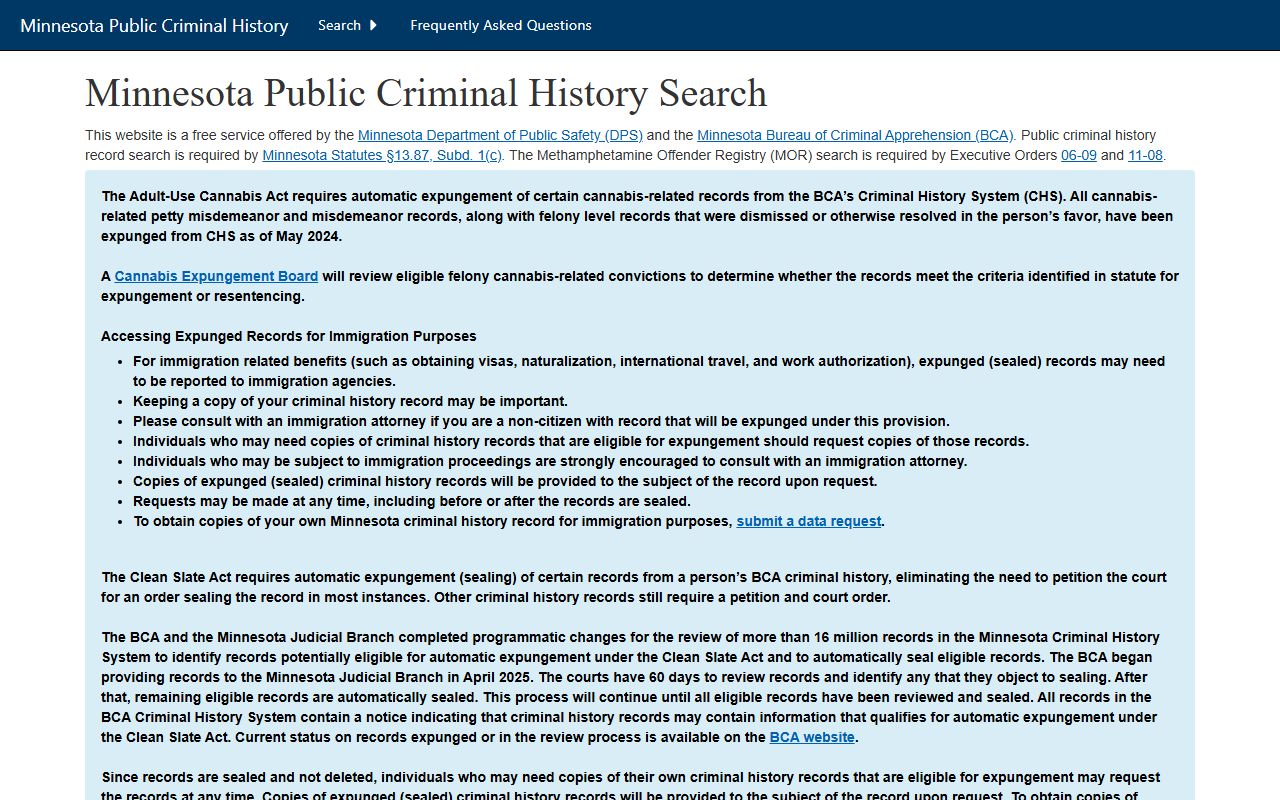
Use BCA for public conviction history and District Court records for the case file, hearings, orders, and sentencing record.
The BCA criminal-history search screen is the search path for public conviction-history lookup.
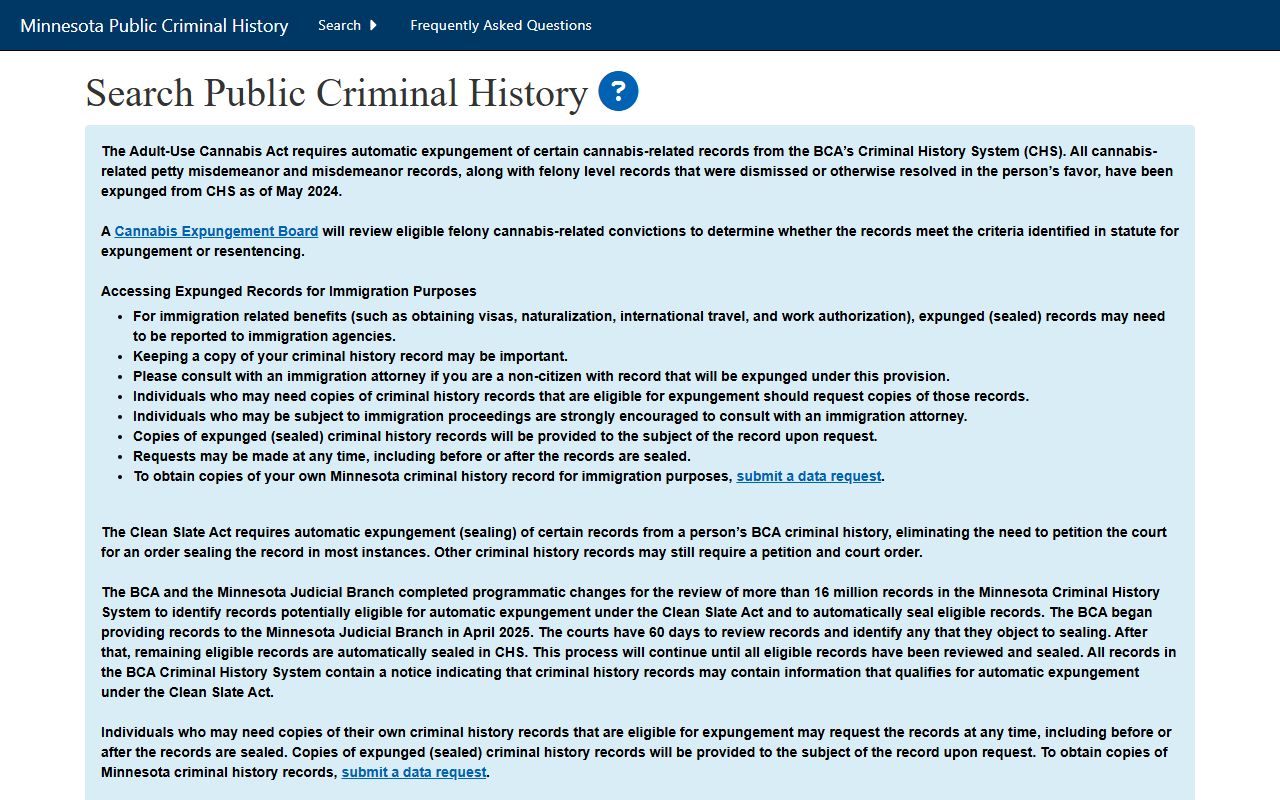
That search is not a substitute for reading the District Court Register of Actions when the case details matter.
Clearwater County Criminal Case Flow
The criminal court record grows as the case moves. A filed complaint or other charging document starts the court case. A first appearance or arraignment advises the defendant of the charge and rights. Omnibus and contested omnibus hearings can address evidence and legal issues. A case may resolve by plea, dismissal, trial, or other court order. If there is a conviction, sentencing records can show jail, prison, probation, fines, restitution, and conditions.
Case flow: Charges Filed › First Appearance or Arraignment › Omnibus and Motions › Plea or Trial › Disposition › Sentencing › Probation Review or Violation if needed
| Stage | What the Criminal Court Record May Show |
|---|---|
| Charges filed | Complaint, statute, charge level, defendant, alleged date, and court file number. |
| First appearance or arraignment | Rights, release conditions, plea entry if taken, and next hearing date. |
| Omnibus or motions | Evidence issues, contested pretrial matters, continuances, and court orders. |
| Plea or trial | Guilty plea, trial result, dismissed counts, acquittal, or other disposition. |
| Sentencing | Sentence, probation, custody, fines, restitution, and conditions when public. |
What Clearwater Criminal Records Show
Clearwater County criminal case numbers use the CR code in samples such as 15-CR-24-86 and 15-CR-26-12. A public case record can show the defendant, filed charges, hearing history, attorneys, court events, warrants connected to the case, plea, disposition, sentence, and probation violation hearings. Public calendar samples also identify judicial officers and hearing labels, including Sentencing, First Appearance, Omnibus Hearing, Contested Omnibus, Review Hearing, and Probation Violation Hearing.
| Field | What It Shows |
|---|---|
| Case number | The District Court criminal file number, commonly using the 15-CR pattern for Clearwater samples. |
| Defendant | The person charged in the criminal case. |
| Charges | The filed criminal allegations and any amended, reduced, dismissed, or resolved counts. |
| Hearings | First appearance, omnibus, motion, review, sentencing, or probation violation events. |
| Plea | The defendant's formal response, such as guilty or not guilty, when public. |
| Disposition | The final outcome for each charge or count. |
| Sentence | Custody, probation, fines, restitution, conditions, and related orders when public. |
| Documents | Public online documents available under remote access limits. |
Clearwater County Charges vs Convictions
A charge is an accusation filed with the court. It is not the same as guilt. The Clearwater County Attorney's research states that charging requires probable cause, while conviction requires proof beyond a reasonable doubt. A criminal court record can show charges that were amended, reduced, dismissed, or resolved by plea. The jail roster may show an initial or amended charge, but the court file is where the filed charge and final disposition should be checked.
| Point | Charge | Conviction |
|---|---|---|
| Meaning | A formal allegation filed or pending in court. | A guilty plea, guilty verdict, or other conviction result. |
| Standard | Probable cause supports filing. | Proof beyond a reasonable doubt supports conviction. |
| Record reading | Check current status and amended counts. | Check disposition and sentence. |
| Background check | May not equal conviction history. | May appear in BCA public conviction-history search. |
The BCA FAQ explains arrest fingerprints, disposition reporting, and criminal-history content.
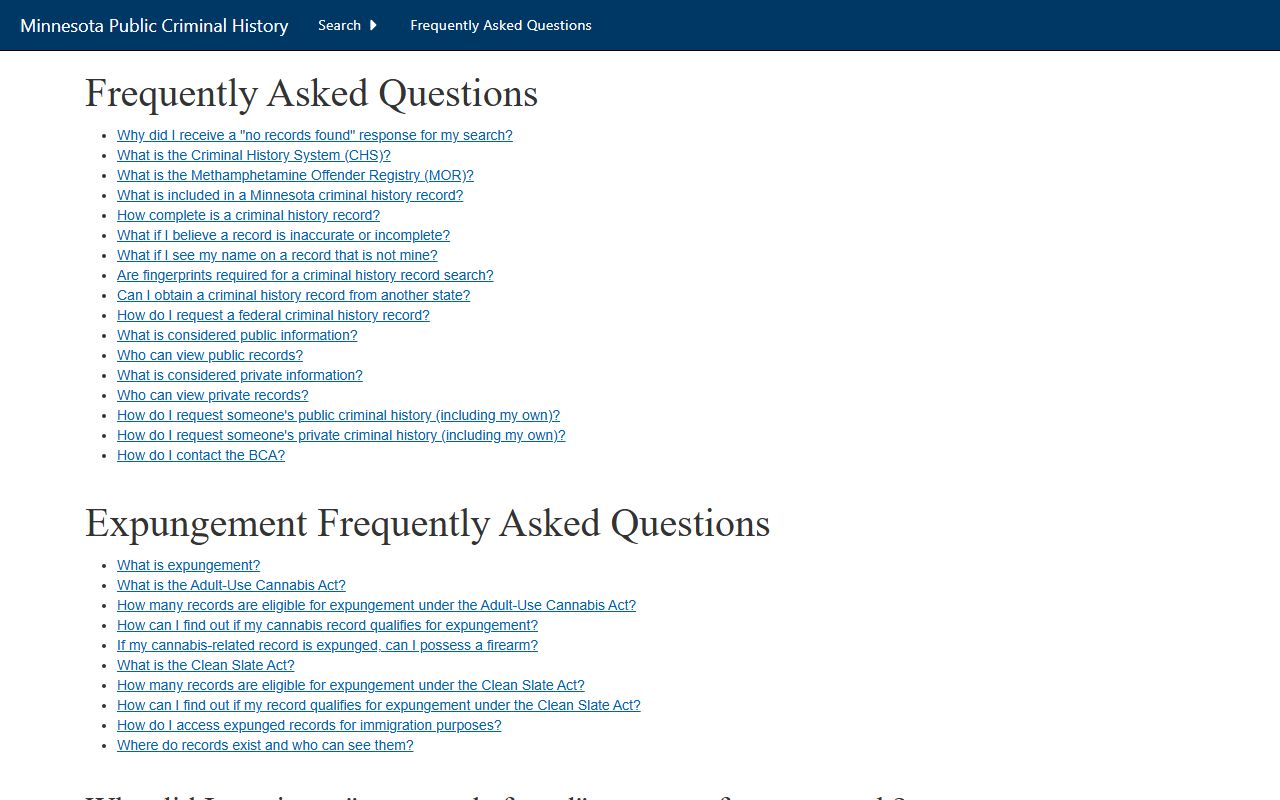
The FAQ helps separate arrest data, court disposition data, and public conviction-history information.
Clearwater County Sealed Criminal Records
Sealing and expungement limit public access to criminal court records. Minnesota research points to Chapter 609A, petition procedures in section 609A.03, and automatic Clean Slate sealing in section 609A.015 for eligible records. A sealed or expunged case may no longer appear in ordinary MCRO searches. MCRO also warns that missing cases may be too old, destroyed under retention schedules, confidential, or unavailable online.
| Point | Sealed | Expunged |
|---|---|---|
| Public visibility | Hidden from ordinary public view by rule or order. | Sealed from public view through statutory or court process. |
| How it occurs | Confidential case type, court order, or access rule. | Automatic, prosecutor-agreed, or petition-based process when eligible. |
| Effect on MCRO | May not appear remotely or may omit details. | May disappear from ordinary public searches. |
| Not the same as | A dismissed charge by itself. | Physical destruction of every agency record for every purpose. |
The Minnesota criminal expungement chapter is the main statutory source.
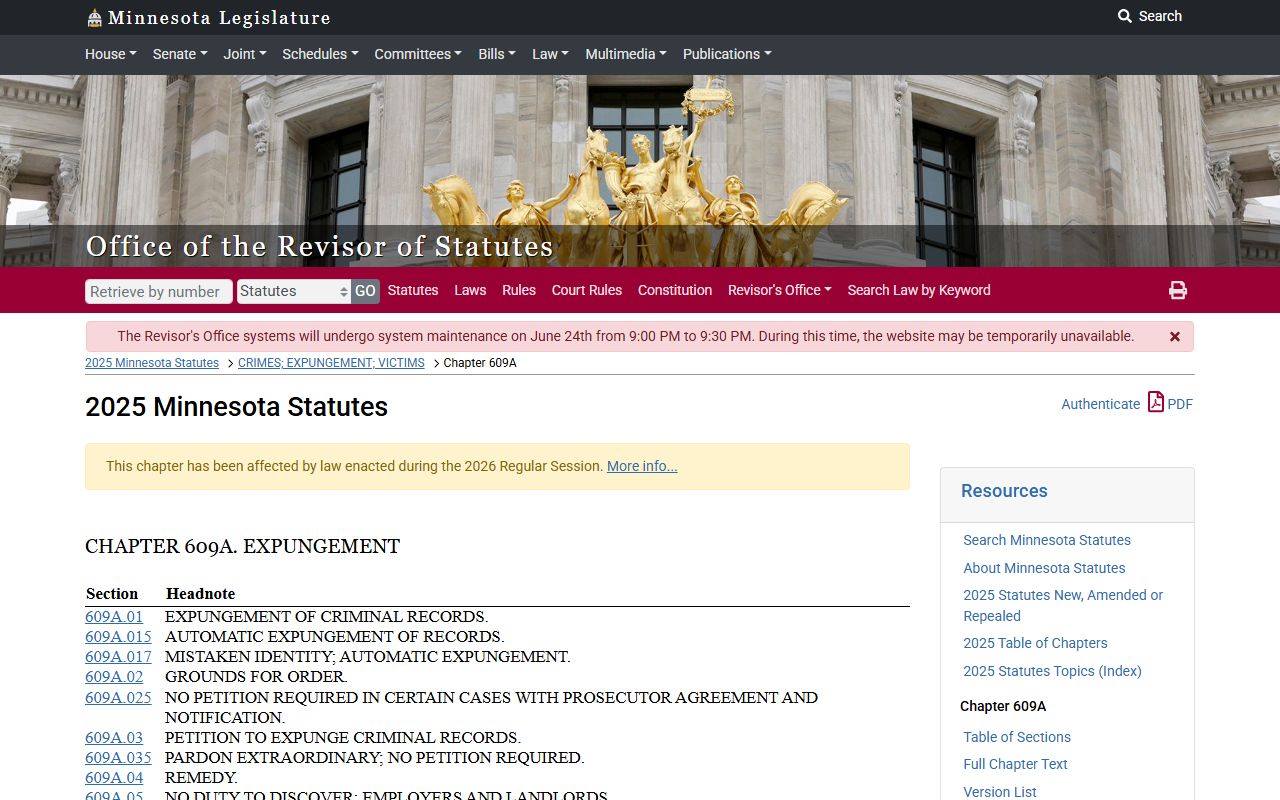
Chapter 609A is the broad authority for sealing eligible criminal records from public access.
The Minnesota expungement petition statute gives the petition route and filing-fee context.
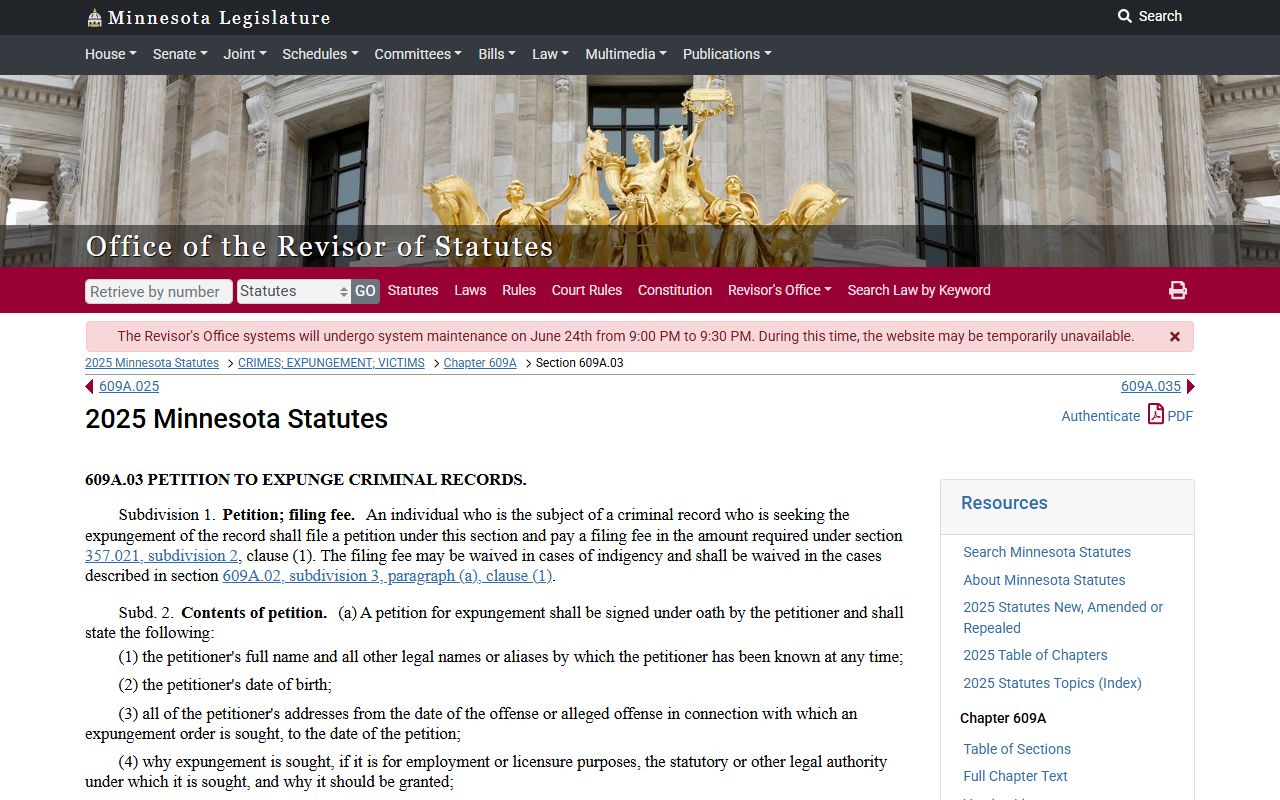
Petition-based expungement usually runs through District Court unless an automatic or prosecutor-agreed process applies.
Clearwater Criminal Record Access
Public access to criminal court records is controlled by the Minnesota Rules of Public Access to Records of the Judicial Branch. MCRO remote access is limited to public information that can be shown online under those rules. Courtroom-terminal access can be broader for some public records. Criminal-history background checks should use BCA public criminal history, not MCRO.
Key access point: Certified criminal court copies come from Clearwater County Court Administration, not from a printed MCRO screen.
Juvenile criminal matters and CHIPS cases are restricted more heavily. The County Attorney prosecutes juvenile offenders and may oversee diversion for minor offenders, but public access does not mirror adult criminal case access. If a case has a sealed file, expungement order, protected victim information, or confidential identifiers, online data may be redacted or absent.
Clearwater County Criminal Record Offices
The Clearwater County Attorney is the county prosecutor for felony offenses, misdemeanor and gross misdemeanor offenses, juvenile matters, CHIPS petitions, child-support and contempt matters, and certain county civil matters. The department directory lists the County Attorney phone as 218.694.6566. The Minnesota Board of Public Defense serves Clearwater County through the Ninth District, and the official public defender application portal is available for District Court criminal cases.
Court Administration handles the court file. The sheriff and jail handle custody, warrants, jail roster information, and law-enforcement records. BCA handles the statewide public conviction-history search. Knowing which office owns the record avoids using a jail roster as a criminal judgment or using MCRO as an official background check.